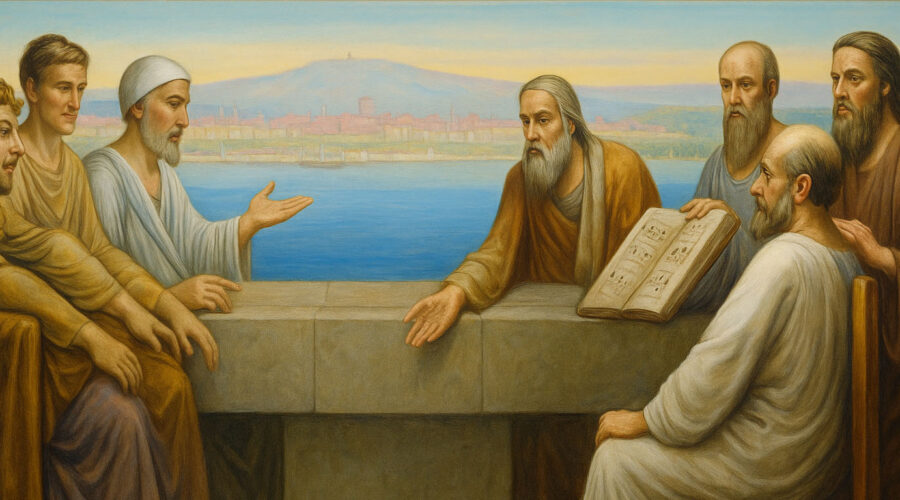
- The Council of Nicaea met from May to August 325 AD to confront the heresy of Arianism, affirming the full divinity of Jesus Christ.
- Arius’ teaching that Jesus was created led to division in the early church; leaders like Athanasius responded with Scripture, such as John 1:1 and Colossians 1:15–17.
- Like the SBC annual meeting today, the Council brought together leaders to clarify doctrine and guard the church’s foundation against cultural confusion.
What really happened at the Council of Nicaea
I didn’t realize this is the 1,700th anniversary of the Council of Nicaea. In the summer of 325 AD, from May into early August, over 300 Christian leaders gathered in the city of Nicaea to confront a theological crisis tearing at the church’s heart like wildfire. These weren’t ivory-tower academics; they were pastors, elders, and bishops, many of whom had endured persecution under Roman emperors like Diocletian. Some literally bore scars for refusing to deny Christ. And yet, they came not to argue politics, but to fight for truth.
The Council of Nicaea reminds us: doctrine matters. What we believe about Jesus isn’t a side issue. It’s the foundation.
The controversy centered around a man named Arius. He was a charismatic preacher who taught that Jesus was created by the Father and wasn’t fully God. His teaching was slick, catchy, and dangerously wrong. Arius even put his theology to music so the masses could sing it. And it was working. Churches were dividing. Bishops were clashing. And confusion about the nature of Christ was spreading.
Enter Emperor Constantine. He had recently legalized Christianity and wanted unity in the empire. He called for bishops to gather in Nicaea, a lakeside town in what is now Turkey. Though Constantine opened the meeting, the theological heavy-lifting was done by pastors and bishops who turned to Scripture to settle the matter.
The council overwhelmingly affirmed what Scripture teaches: Jesus is not a created being—He is “of the same substance” (Greek: homoousios) as the Father. Fully God. Eternal. The Word made flesh.
Athanasius, a young deacon from Alexandria who would become one of the boldest defenders of truth, stood firm against Arius. He pointed to John 1:1, “In the beginning was the Word, and the Word was with God, and the Word was God,” and to Colossians 1:15–17, where Christ is described as the image of the invisible God, the one by whom and for whom all things were created. These verses crushed the idea that Jesus was anything less than fully divine.
The Nicene Creed was born, a bold declaration that Jesus is “begotten, not made, being of one substance with the Father.” That phrase, “one substance” (homoousios), became the dividing line between biblical orthodoxy and heresy. It was a bold confession that still echoes in faithful churches today.
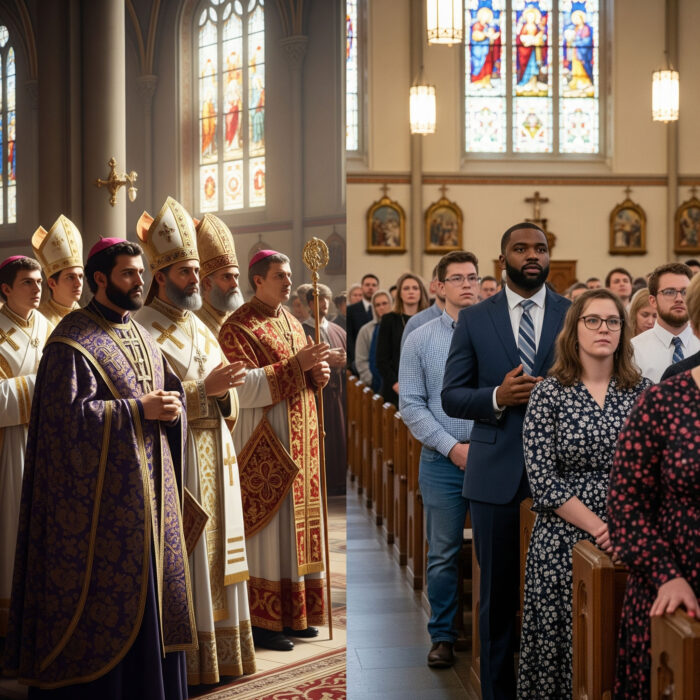
This week, the Southern Baptist Convention meets for its annual gathering. I can’t help but draw a parallel. Like the Council of Nicaea, SBC messengers are sent from local churches to discuss pressing issues, clarify doctrine, and call the church back to biblical faithfulness. No, it’s not an ecumenical council, and SBC decisions aren’t binding on every church—but the stakes are still high. In a time when culture is pressing in, the need for clarity, courage, and conviction hasn’t changed.
The Council of Nicaea reminds us: doctrine matters. What we believe about Jesus isn’t a side issue. It’s the foundation. And God still uses local churches and ordinary leaders to stand firm in truth.
Seventeen centuries later, may we have the same boldness to say, “We believe in one Lord Jesus Christ… God from God, Light from Light, true God from true God.”
And may we never treat truth as negotiable. It was not in 325. And not now.
Suggested Reading for More Information
Defining God: Athanasius, Nicaea and the Trinitarian Controversy of the Fourth Century, by Patrick Whitworth
On the Decrees of the Council of Nicaea, by Athanasius
The Way to Nicaea and The Nicene Faith, by John Behr
Nicaea and It’s Legacy, by Lewis Ayres
You can also learn more by searching “Council of Nicaea” at Ligonier.org and GTY. Org.